
Electrophysiological Symbiosis: Architecture, Augmented Cognition
Neuralink
NEURALINK
Salamon & Salamon
5/1/20263 min read
Executive Summary
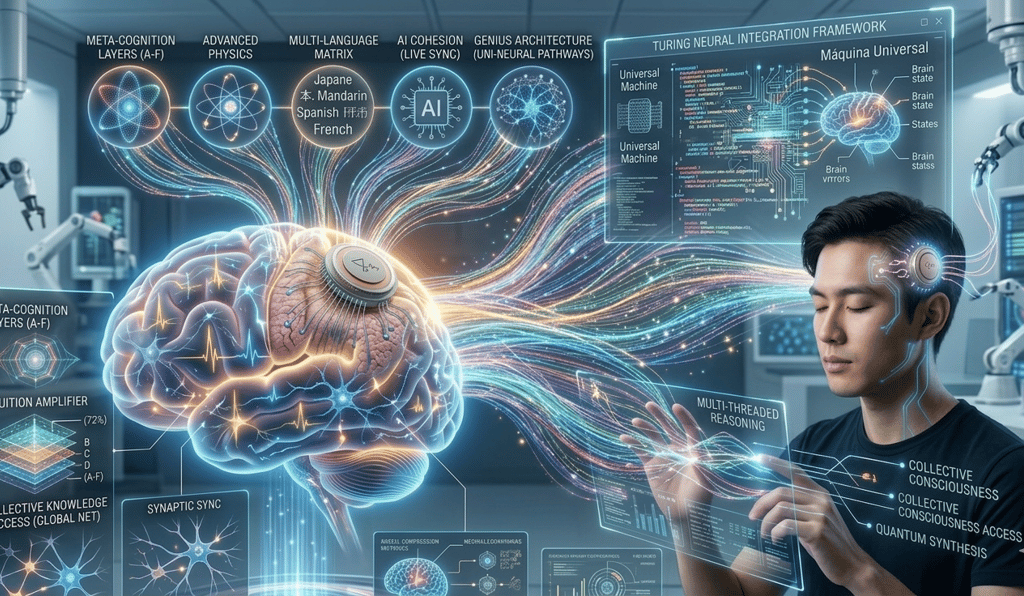
As we traverse mid-2026, Elon Musk’s Neuralink has evolved from a speculative vision into a tangible biophysical reality. This article provides a comprehensive analysis of the Neuralink Brain-Computer Interface (BCI), examining its technical underpinnings—the translation of ionic action potentials into digital binary data—and its potential to revolutionize human intellect. Beyond therapeutic restoration for individuals with quadriplegia or blindness, the discussion addresses the paradigm shift toward "cognitive downloading," where semantic and technical knowledge could be injected directly into the neural architecture. While the promise of human-silicon augmentation is profound, the article rigorously evaluates the existential risks, including systemic inflammation, cognitive hacking, and the dangerous dependency on proprietary hardware. We stand at the precipice of a new era of evolution, where the distinction between biological thought and synthetic processing is permanently dissolved.
Introduction
The Neuralink interface is not merely a medical instrument; it is the prelude to an unprecedented revolution in human evolution. By seeking high-bandwidth, direct-connect integration between biological tissue and silicon hardware, Neuralink transcends the role of a standard prosthetic, aiming instead for the definitive expansion of the human cognitive landscape. As the technology moves into global clinical trials—specifically through the PRIME Study—we must confront the reality of merging our central nervous systems with digital architectures. This article details the biophysical functioning of the N1 chip, the feasibility of instantaneous knowledge acquisition, and the profound legal and ethical implications of embedding an external system within the human cortex.
The Biophysical Interface: Translating the Neuronal Spark
At its core, Neuralink functions by bridging the gap between biological and synthetic signal processing. The brain communicates through the movement of ions (sodium, potassium, and calcium), creating electrical fields. Neuralink’s architecture uses ultra-fine, flexible threads that capture these signals in the interstitial space without compromising the structural integrity of the neuronal membrane.
A critical engineering achievement is "impedance matching," which prevents long-term gliosis—the brain’s natural scarring response—ensuring sustained signal clarity. The N1 chip performs high-fidelity amplification and filtration of microvolt-level signals, converting them into digital data via advanced Analog-to-Digital Converters (ADCs). Utilizing sophisticated machine learning models, the system performs "spike sorting," effectively decoding the chaotic firing of millions of neurons into coherent commands, concepts, or data streams.
The Cognitive Leap: Knowledge via Semantic Download
The most provocative potential of Neuralink is the transition from simple motor decoding to semantic and symbolic integration. Learning a new language or complex technical skill traditionally demands years of synaptic plasticity. Neuralink proposes to subvert this by bypassing the slow, external input process. By stimulating specific pathways in Wernicke’s and Broca’s areas, the chip could conceptually "inject" linguistic proficiency, effectively treating the brain as a processor ready to run external linguistic software.
Furthermore, "academic downloads" seek to stimulate the formation of specific synaptic patterns, allowing for the instantaneous acquisition of specialized information. In this new paradigm, "genius" will no longer be measured by the volume of stored data, but by the capacity for synthesis and intuition—moving intelligence from "storage" to the "architecture of unprecedented connections."
The Risks of the Cortex: Cybersecurity and Autonomy
The bidirectionality of the Neuralink system—the ability to both read and write data—introduces vulnerabilities that have no historical precedent. "Cognitive Hacking," or the injection of false signals to modulate mood, belief, or physical movement, represents the ultimate threat to personal sovereignty.
Beyond the digital threats, we must address the physical and biophysical dangers:
Thread Retraction: The mechanical movement of the brain within the skull can cause threads to migrate, leading to signal degradation or tissue damage.
Thermal Management: A hardware malfunction could cause localized heating, potentially causing micro-burns to delicate neurons.
Systemic Dependency: If an individual’s cognitive baseline is elevated via the chip, a system failure or software "blackout" could render them functionally incapacitated, creating a new, terrifying form of technological hostage-taking.
Conclusion
Neuralink is more than a promising startup; it is a biophysical construction site. As of May 2026, the technology has demonstrated remarkable success in helping patients control computers through thought, marking the beginning of the "Adult-Cyborg" era. However, the path to a hyper-intelligent future is conditioned by our ability to govern the risks inherent in the cortical landscape. We are effectively opting into a permanent partnership with silicon. The question that remains is whether we are prepared to accept the vulnerability of a system crash within the very architecture of our own minds, or if we will manage to balance this technological ascent with the protection of our fundamental biological autonomy.
Bibliography
Musk, E., et al. (2026). Neuralink: Clinical Progress and the Future of Brain-Machine Integration. Journal of Neuroscience and Engineering.
Neuralink Corporation. (2026). PRIME Study: Longitudinal Safety and Efficacy Data.
Topol, E. J. (2026). The Cyborg Physician: Ethics in the Era of Brain-Computer Interfaces. Nature Biomedical Engineering.
World Economic Forum. (2026). The Future of Human Augmentation and the Bio-Economy. WEF Publishing.
Contact
Contact us for questions or suggestions
contact@turingvision.com
fone: + 55 54 99122 0659
© 2026. All rights reserved. https://turingsvision.com/privacy-policy