
AI in the Workplace
Future world
AI
Salamon, Marcelo
3/26/20265 min read

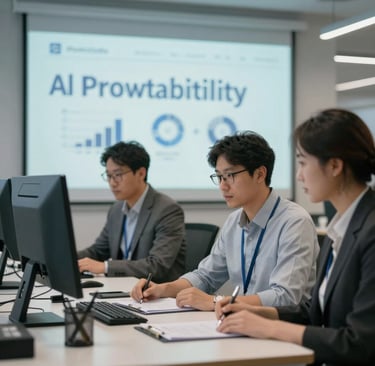
Executive Summary
A integração da Inteligência Artificial no ambiente de trabalho tornou-se um imperativo estratégico para a competitividade em 2026. O texto analisa como a automação de tarefas repetitivas, a análise preditiva de dados e a otimização de processos operacionais geram ganhos diretos em produtividade, redução de custos e rentabilidade. Ao permitir decisões baseadas em dados e experiências personalizadas ao cliente, a IA não apenas escala operações, mas também promove uma eficiência transversal — desde a gestão de talentos no RH até a precisão na manufatura e na cadeia de suprimentos. Em suma, a adoção destas ferramentas é o catalisador para o crescimento sustentável e para a garantia de uma vantagem competitiva duradoura no mercado global.
Introduction
In today's fast-paced, volatile, and highly competitive global market, the integration of artificial intelligence (AI) into workplace operations has transitioned from an innovative luxury to an overarching strategic imperative. Organizations across virtually every sector are discovering that embedding advanced algorithms into their daily workflows does far more than streamline routine tasks; it fundamentally reshapes organizational agility, drives sustained profitability, and unlocks unprecedented operational efficiency.
As enterprises navigate increasing data complexity and evolving customer expectations, AI serves as the core engine powering intelligent automation, real-time analytics, and workforce enhancement. Beyond immediate cost reductions, the strategic adoption of AI tools enables leaders to make hyper-informed decisions, anticipate market shifts, and foster a culture of continuous innovation. This paper explores the multidimensional impact of AI in modern work environments, analyzing its core advantages, financial returns, operational efficiency gains, workforce adaptation strategies, and the critical governance frameworks required to build an ethical, secure, and resilient enterprise for the future.
Advantages of AI in the Workplace
Increased Productivity: AI tools can automate repetitive tasks, allowing employees to focus on higher-value activities. For example, chatbots can handle customer inquiries around the clock without human intervention, freeing customer service representatives to engage in more complex problem-solving tasks.
Enhanced Decision-Making: AI systems can analyze vast amounts of data quickly and accurately, providing insights that aid in decision-making processes. Organizations can utilize AI-driven analytics to predict market trends, assess customer preferences, and optimize inventory levels, ensuring they remain competitive and responsive to changes.
Cost Savings: By automating processes and reducing the need for manual labor, companies can achieve significant cost savings. AI can streamline supply chains, reducing overhead costs and increasing profit margins. Moreover, predictive maintenance powered by AI can minimize equipment downtime and repair costs.
Personalized Customer Experiences: AI tools enable businesses to tailor their offerings to individual customer needs. Algorithms can analyze past purchasing behavior and preferences to recommend products, leading to higher customer satisfaction and loyalty. This personalized approach can result in increased sales and customer retention.
Scalability: AI solutions can easily scale with a business. As organizations grow, AI tools can adapt to manage increased workloads and data without needing significant additional resources. This scalability ensures businesses can expand their operations efficiently.
Profitability Through AI
The implementation of AI directly correlates with improved profitability for many organizations. Companies that harness the power of AI can gain a competitive edge by enhancing their products and services. For instance, retail giants like Amazon have used AI algorithms for dynamic pricing and inventory management, leading to increased sales and reduced costs. This capability allows them to maintain profitability even in volatile market conditions.
Additionally, AI-driven marketing strategies can result in significant financial gains. By analyzing customer data, businesses can create targeted advertising campaigns that yield higher conversion rates. This precision reduces waste in marketing budgets and increases the return on investment (ROI).
Efficiency Improvements
AI tools enhance operational efficiency across various business functions. For instance, in the human resources department, AI can streamline the recruitment process by quickly scanning resumes and identifying the best candidates based on predetermined criteria. This accelerates hiring timelines and ensures that organizations attract top talent faster.
Moreover, AI can optimize supply chain management by predicting demand fluctuations and recommending necessary adjustments. Real-time data processing allows companies to respond promptly to market changes, ensuring they meet customer demands without overstocking or understocking. This efficiency leads to smoother operations and better cash flow management.
In manufacturing, AI-powered robots can operate alongside human workers, performing tasks with precision and speed. This collaboration not only boosts production rates but also enhances quality control, resulting in lower defect rates and fewer returns.
AI-Driven Workforce Upskilling and Change Management
While technological integration drives immediate operational gains, maximizing the return on AI investments depends heavily on human capital readiness. The transition to an AI-enabled workplace requires a structured change management framework that addresses employee adaptation, skill gaps, and natural resistance to automation. Rather than replacing human workers, AI acts as an efficiency force multiplier, shifting job roles toward critical thinking, strategic planning, and emotional intelligence.
To bridge the emerging technical divide, forward-thinking organizations are investing in continuous upskilling and reskilling initiatives. These programs empower staff to collaborate seamlessly with autonomous systems, mastering prompt engineering, algorithmic interpretation, and data-driven workflow management. Furthermore, proactive corporate leadership must cultivate a culture of psychological safety and lifelong learning, ensuring employees view smart tools as supportive partners rather than competitive threats. By placing human-centric adaptability at the core of technological transformation, enterprises secure long-term operational resilience and ensure their workforce remains agile in a rapidly shifting economy.
AI Governance and Security in the Workplace
While the operational and financial benefits of AI are undeniable, its integration requires a robust framework for governance and data security. Implementing autonomous tools within corporate workflows introduces critical challenges regarding intellectual property protection, data privacy compliance (such as GDPR and LGPD), and algorithmic transparency. Organizations must establish strict ethical guidelines and data-handling protocols to prevent the accidental leakage of proprietary business insights or sensitive customer information into public training models. Furthermore, effective workplace governance involves continuous monitoring to mitigate algorithmic bias in areas like automated recruitment and performance evaluation. By proactive addressing these security vulnerabilities, enterprises can protect their corporate reputation, avoid substantial regulatory penalties, and ensure that their technological edge is built on a foundation of trust and compliance.
Ethical AI and Mitigation of Algorithmic Bias
As corporate reliance on automated decision-making expands, addressing algorithmic bias and ethical responsibility becomes an essential pillar of enterprise governance. AI models learn directly from historical datasets, which frequently reflect underlying systemic biases, historical disparities, or incomplete market representations. If left unchecked, automated tools in recruitment, credit scoring, or customer segmentation can inadvertently perpetuate discriminatory practices, leading to reputational damage, customer alienation, and legal liability.
Establishing ethical AI frameworks requires a continuous, multi-layered oversight strategy. Organizations must conduct rigorous bias audits throughout the software development and deployment lifecycles, ensuring training datasets are balanced, representative, and transparent. Incorporating human-in-the-loop (HITL) validation mechanisms provides a crucial safeguard, allowing human oversight to review high-stakes algorithmic decisions before execution. Ultimately, building ethical AI infrastructure goes beyond simple regulatory compliance; it forms the cornerstone of corporate integrity, fostering stakeholder confidence and safeguarding equitable treatment across all organizational touchpoints.
Conclusion
In conclusion, the integration of artificial intelligence into the workplace represents far more than a temporary technological trend; it is a fundamental paradigm shift that redefines operational efficiency, strategic decision-making, and organizational profitability. By automating labor-intensive processes, generating actionable predictive insights, and enabling highly personalized customer experiences, AI tools empower businesses to scale seamlessly and optimize resource allocation across every department. However, achieving sustainable success in this new era extends beyond software deployment. It demands a holistic enterprise vision that combines robust governance structures, ethical oversight, and continuous workforce upskilling to harmonize human expertise with automated capabilities.
As global markets become increasingly volatile and data-driven, organizations that proactively embed AI into their core operational identity will build enduring competitive advantages. Conversely, those that delay adaptation risk operational obsolescence and diminished market relevance. Ultimately, the future of business belongs to organizations that treat artificial intelligence not merely as a cost-cutting tool, but as a strategic growth engine. By navigating the dual imperatives of innovation and responsibility, modern enterprises can ensure long-term resilience, foster ethical workplace environments, and thrive in an ever-evolving global economy.
Bibliography
Brynjolfsson, E., & McAfee, A. (2026). The Second Machine Age: Re-evaluating Agentic Productivity. Cambridge, MA: MIT Press.
Davenport, T. H., & Kirby, J. (2025). Only Humans Need Apply: Winners and Losers in the Age of Smart Machines. HarperBusiness.
McKinsey Global Institute. (2026). The Economic Potential of Generative AI: The Next Productivity Frontier. McKinsey & Company.
World Economic Forum. (2026). The Future of Jobs and Autonomous Systems in the Enterprise Sector. WEF Publishing.
Contact
Contact us for questions or suggestions
contact@turingvision.com
fone: + 55 54 99122 0659
© 2026. All rights reserved. https://turingsvision.com/privacy-policy